
60 million.
That’s how many people vote in a typical U.S. presidential election, each choosing their version of the best path forward.
But what’s really being decided?
For some, it’s not just policy or personality—it’s a question about human nature itself: Do we have a set purpose (hello, essentialism), or are we free to define ourselves through our choices (welcome to existentialism)?
Existentialism vs. Essentialism: Freedom or Fixed Nature?
Existentialism, championed by philosophers like Jean-Paul Sartre and Simone de Beauvoir (for the gossip, they were lovers if you must know), is all about freedom and individual choice. It says that life has no inherent purpose—no prewritten “meaning” we’re here to fulfill. Instead, we create our purpose through decisions and actions. Sartre summed it up with his famous line, “Existence precedes essence,” meaning we exist first, and only through living do we craft what we’re about. For existentialists, we’re blank canvases until we pick up the brush 🎨.
On the other hand, essentialism—rooted in thinkers like Aristotle—believes that everything has an essential purpose or essence, including people. Essentialists argue that just as a tree grows to bear fruit, humans have a defined nature or role. It’s the idea that we’re born with specific potentials, qualities, or purposes to fulfill, and our job is to uncover, rather than create, that essence.
What’s Existentialism got to do with Politics? Well, quite a lot, actually.
Why Existentialism Leans Left and Essentialism Skews Right
Now, here’s where it gets political. Existentialist thought lines up with progressive ideologies, emphasizing freedom and individual rights over rigid structures. And left-leaning views tend to support societal change, pushing against fixed roles or traditions: they align with the existentialist belief in defining one’s own path.
Conversely, essentialism resonates with conservative ideologies, which favor tradition, structure, and a belief in foundational roles—essential qualities that society needs for stability. Right-leaning perspectives often emphasize inherent roles, like family values and national identity, reflecting an essentialist framework that believes these roles should be preserved rather than redefined.
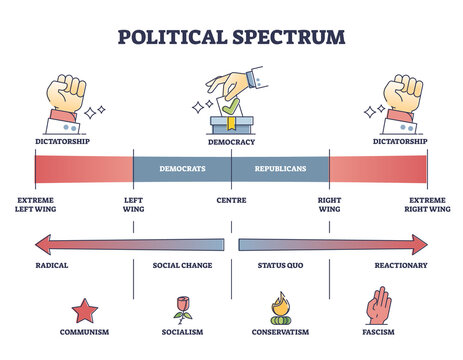
Tying It to the Political Compass: The “Progress vs. Preservation” Graph
Social scientist Hans Eysenck famously mapped political views onto a “progress vs. preservation” spectrum. The left side of the graph champions progress, reform, and flexibility, while the right stresses stability and the preservation of tradition. In existential terms, progressives argue for the freedom to change paths and redefine roles. Conservatives, on the other hand, would argue for respecting established meanings and “essences” in society.
Existentialism in Real Life: Making Choices vs. Finding Roles
Think about it in terms of careers, relationships, or even everyday choices. An existentialist approach says you’re free to switch paths, start over, or redefine yourself whenever you feel the need.
The essentialist might say there’s value in discovering a “true calling” and sticking to it. One isn’t better than the other—they’re just different ways of seeing what it means to live meaningfully.
The Existentialist’s Responsibility (Hint: It’s Not Easy)
With existentialism comes a certain weight. Sartre called it the “burden of freedom”—if there’s no inherent meaning, then each of us has the daunting job of creating one. You can’t blame destiny, the stars, or anyone else for where you end up; it’s all on you. It’s like standing in front of a giant, blank canvas with an unlimited set of paints and brushes, but no instructions. Scary? Maybe. Liberating? Absolutely.
So, as we navigate life’s choices—whether it’s about who we vote for, what career we chase, or how we spend our days—existentialism reminds us that we’re painting our own canvas. Essentialism, meanwhile, reminds us that we might find peace in looking inward, connecting with the essence we already hold.
With existentialism anyway, there’s an undeniable challenge: we hold the brush to our own lives, free to create and define our path. It’s both terrifying and exhilarating, knowing that every choice is ours alone. But maybe that’s the beauty of it all—a reminder that, in shaping our lives, we hold true freedom.
And as Sartre put it: “Man is condemned to be free.”
XOXO, strangers!



 sara aimelle
Leave a comment