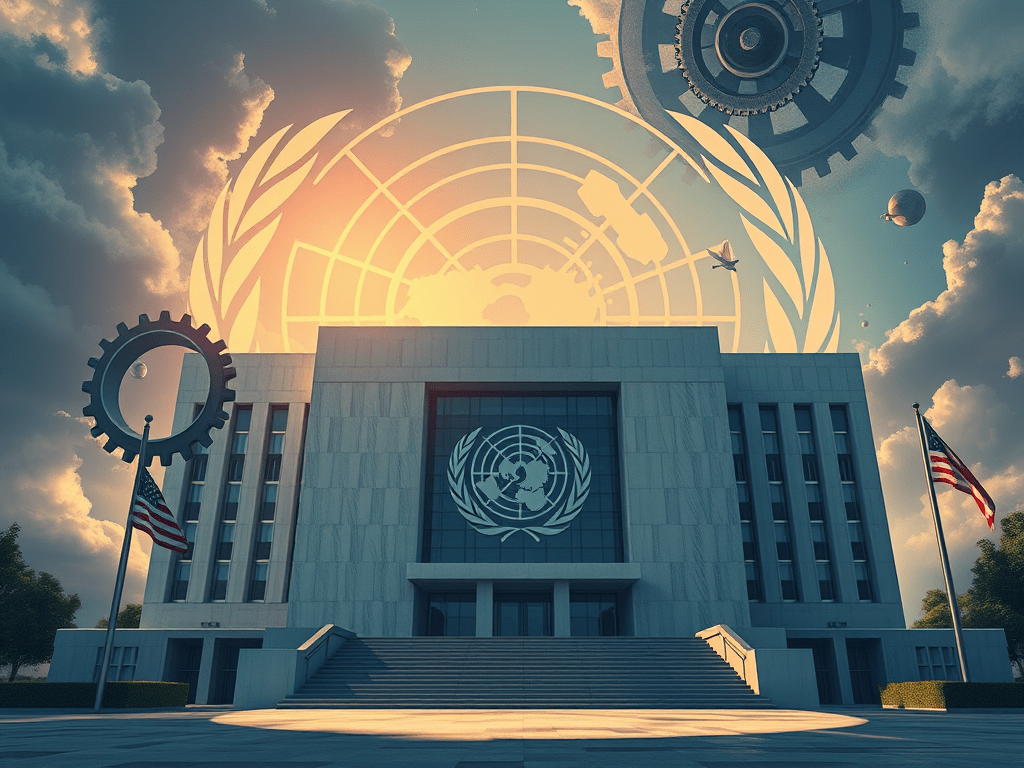
Imagine trying to use a flip phone in 2025. That’s kind of like the United Nations (UN) today—designed in 1945, struggling to handle the chaos of the 21st century. Even Antonio Guterres, the UN’s Secretary-General, said it: our international institutions are “totally unfit” for today’s challenges. Ouch.
The UN was created after World War II to prevent another global catastrophe. Back then, it was a big deal—a shining beacon of international cooperation. But fast-forward to now: the world’s a different place. New powers are rising, crises are global, and conflicts are messier than ever. So, the big question is: should we reform the UN to make it actually useful again? Spoiler: yes, but it’s complicated.
Let’s dive into why the UN feels like it’s stuck in the past, what we could do to fix it, and why those fixes are, well, tricky…
Why the UN Needs a Makeover
The Security Council: A 1945 VIP Club
The UN Security Council (UNSC) is supposed to handle international peace and security. Sounds important, right? But here’s the kicker: it’s run by five permanent members (the P5) with veto power—the US, Russia, China, France, and the UK. These countries were top dogs in 1945, but today? Not so much.
- New kids on the block: Countries like India, Brazil, and South Africa are rising powers, but they don’t get a seat at the big table. Meanwhile, Africa—a continent with 1.4 billion people—is completely left out. Fair? You know the answer: not really.
- The veto drama: Any P5 member can block decisions, which means nothing gets done. Russia and China even vetoed aid to Syria in 2020, leaving millions without help. Great job, guys.
The UN: Watching Crises Like a Netflix Series
The UN’s track record with modern crises is… not great. From Ukraine to Yemen to Sudan, the organization often ends up as a helpless bystander.
- No money, no power: The UN depends on member states for funding and troops. If countries don’t feel like helping, the UN can’t act. Imagine running a business where your employees decide their own schedules—chaos.
- Epic fails: Missions like the Rwandan genocide in 1994 and Srebrenica in 1995 were outright disasters. Even the famous Blue Helmets sometimes can’t do much.
Big Powers Play Solo
The UN’s biggest members often go rogue, as in sometimes they say go and take decisions by themselves, clearly forgetting they’re actually not alone in the world: this is called unilateralism. The US, for example, has taken military action outside the UN framework plenty of times. When major players ignore the rules, the system loses credibility. It’s like trying to play Monopoly when someone keeps stealing money from the bank.
So, How Do We Fix This Mess?
A Stronger, Smarter UN
1. Give the International Criminal Court (ICC) more muscle
The ICC handles crimes like genocide and war crimes, but it needs much more resources and support. Case in point: Vladimir Putin skipped a major summit in 2023 because the ICC might have arrested him… Accountability works—if we actually enforce it.
2. Create a permanent UN military
Right now, the UN has to beg countries to lend troops. A permanent, UN-controlled force could respond faster to crises. Sounds ambitious? Sure. But it’s not impossible.
3. Automatic economic sanctions
Imagine if countries breaking international rules faced instant fines or trade restrictions. Hitting their wallets could work better than waiting for endless debates.
Fix the Security Council
1. More seats, more representation
Add new permanent members like India, Brazil, and African nations. Make the Council reflect today’s world, not the post-WWII era.
2. Limit or scrap the veto
The veto is a dealbreaker for many reforms. Limiting its use—especially for crises like mass atrocities—could make the Council more effective.
Diversify Funding
The UN depends heavily on the US and China for cash. Broadening its funding base—think taxes on global corporations or climate-related industries—could reduce bias and boost independence.
And… Empower the General Assembly
The General Assembly includes all 193 UN member states but has little real power. Giving it more decision-making authority could make the UN more democratic and less dominated by the P5.
The Catch: Why Reform Is Hard
Big Powers Hate Change
The P5 won’t give up their vetoes or privileges without a fight. They see reforms as threats to their power, and let’s be honest—they’re not wrong. It would indeed disempower them tremendously not to be able to say “Uh, no, I don’t like that” as much as they please!
Legal and Bureaucratic Nightmares
Changing the UN Charter requires two-thirds of member states to agree, including all P5 members. Good luck getting everyone on the same page. All it takes is one of them to disagree, and everything else goes to pot!
Who’s Paying…?
Reforms need funding, and countries are already hesitant to pay more. Plus, there’s the question of who controls these new initiatives—a touchy subject.
Why It REALLY Matters
Ignoring global politics doesn’t make them go away. The UN might be flawed, but it’s one of the only platforms where the world comes together. Reforming it isn’t just a bureaucratic exercise—it’s about ensuring peace, justice, and stability in an increasingly chaotic world.
And to finish this first article on politics, I’ll just remind you of this, guys: Ignore politics, and it will decide for you.
So you better go and read all my other articles! 😉
XOXO, strangers!


 sara aimelle
Leave a comment